Compliance
The auditor's path, walked forwards
An AC7102/8 audit follows a chain: the thermocouple, the system accuracy test, the uniformity survey, the instrument calibration, and finally the load that ran under all of them. HeatLock is built along that chain rather than around it.
01 Thermocouples
Expiry is a date and a count
A thermocouple inside its calibration date can still be spent.
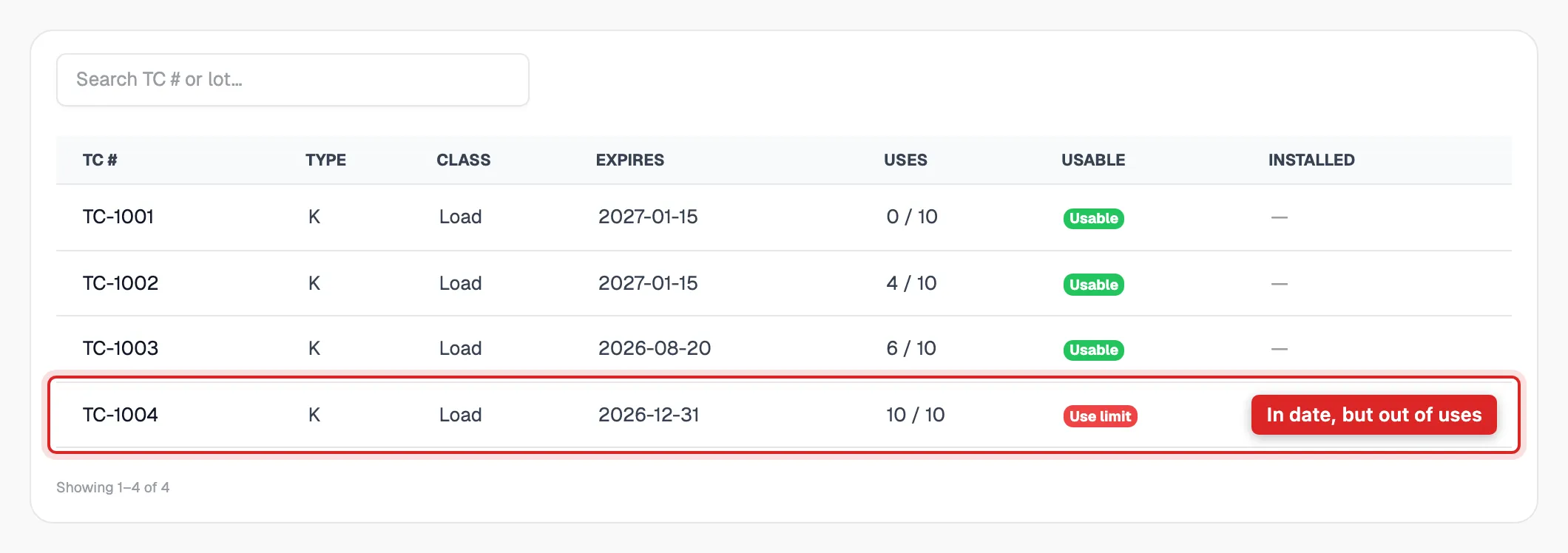
Load thermocouples carry a lot number, a calibration date and a permitted number of uses. Usability is computed from all of it, every time — never read off a status somebody set by hand.
The use-count half is what most systems miss. TC-1004 below is in date until December and still refused, because it has run its ten cycles. A system that only checks the date would have passed it.
02 System accuracy test
Pass is computed, never entered
The correction factor of the test thermocouple is applied for you.
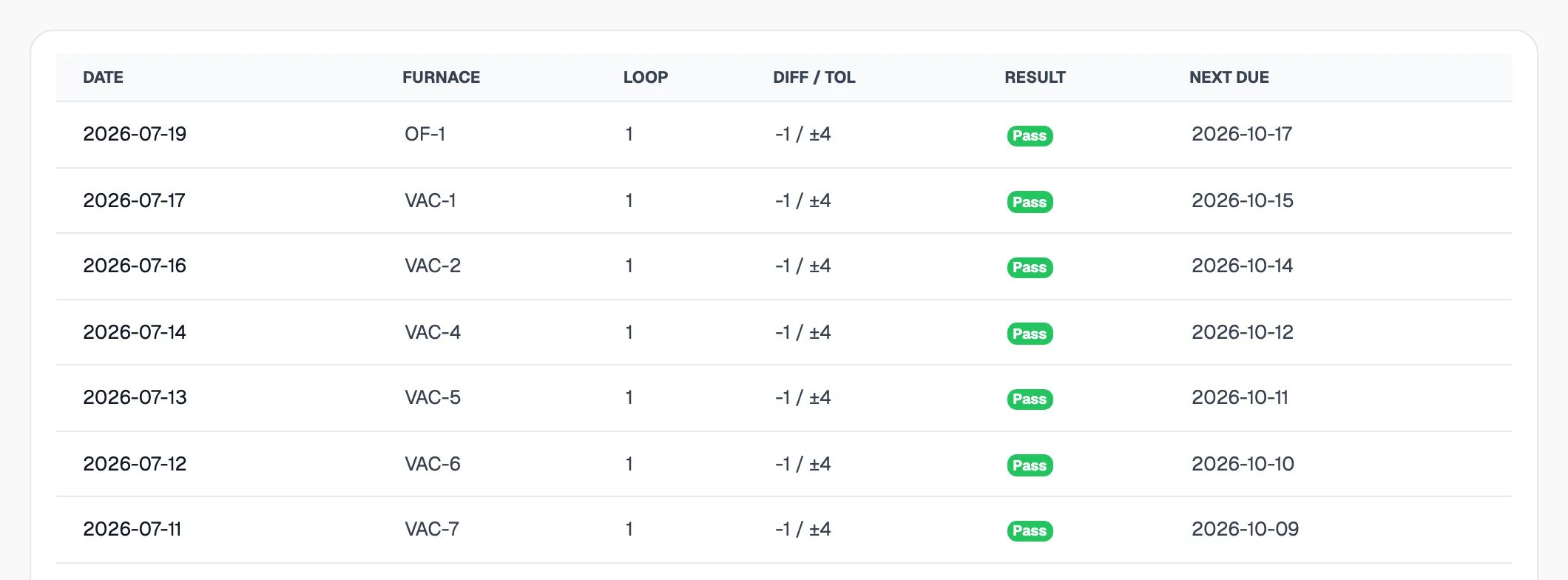
A SAT records the instrument reading and the test thermocouple reading. The corrected reading applies that thermocouple's own signed correction factor, the difference is compared against tolerance, and pass or fail falls out of the arithmetic.
Nobody types a verdict. The due date comes from the furnace's own SAT interval, and an expired test thermocouple is refused before the test is recorded at all.
03 Temperature uniformity survey
The survey sets the qualified range
A furnace is qualified for a range, not for "hot".
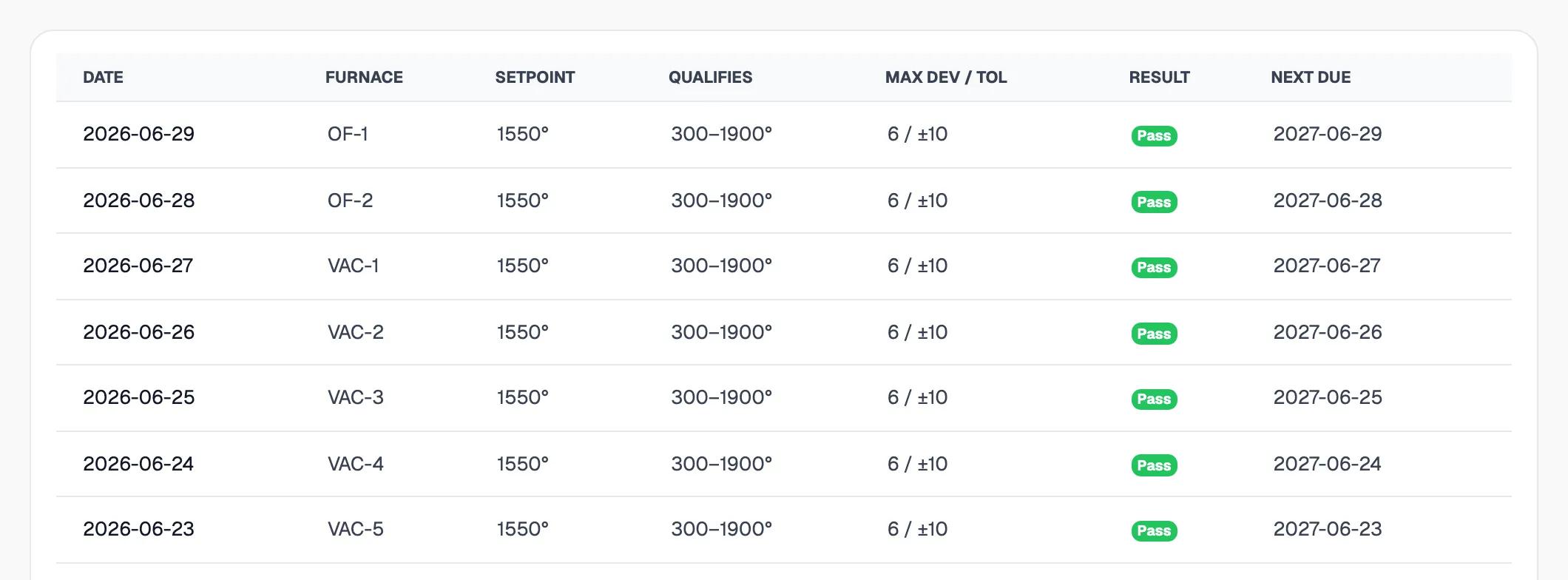
A TUS records every thermocouple in the work zone, computes the maximum deviation across them, and establishes the temperature range the furnace is qualified to run.
That range is not decoration. It is checked against the cycle temperature at the gate — a furnace surveyed to 300–1900° will not take a load asking for 2100°, however current the survey is.
04 Instrument calibration
Controller, recorder, over-temperature
Each instrument is tracked separately, because the standard treats them separately.
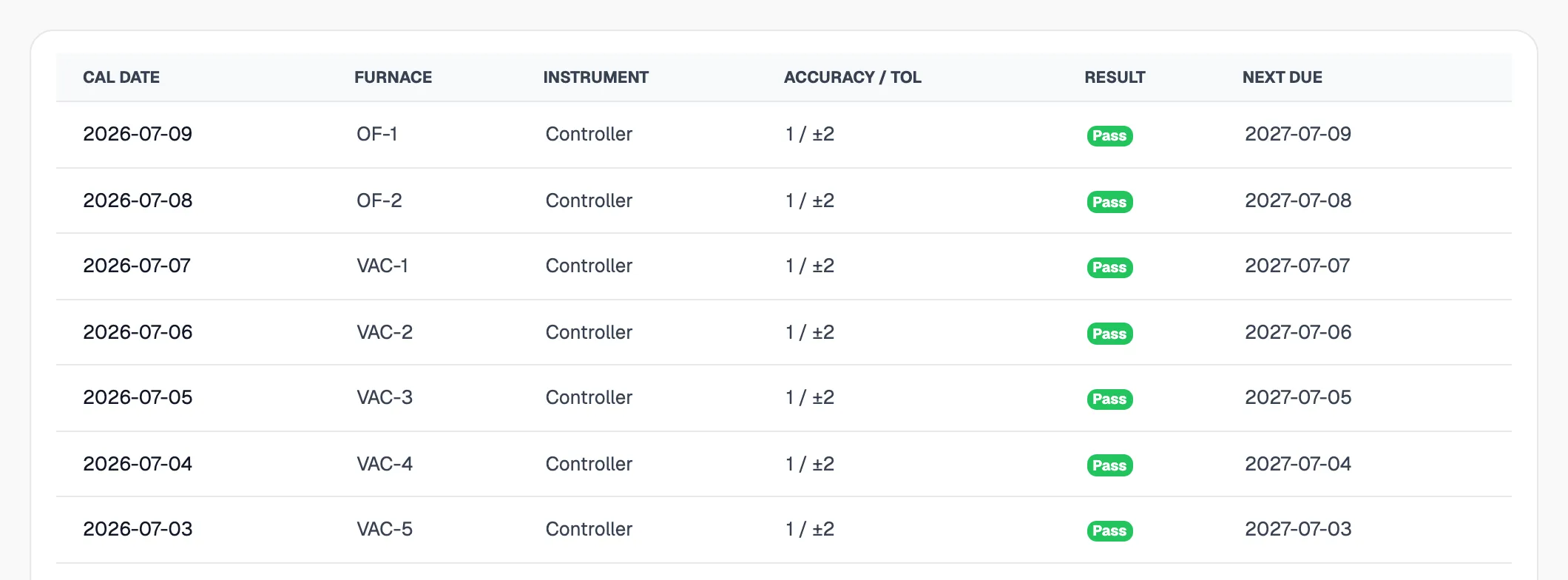
Calibration is recorded per instrument with its accuracy and permitted tolerance, and pass or fail is computed the same way a SAT is.
The controller must be current and passing for the furnace to run. A recorder or over-temperature instrument that is overdue or failed blocks it too — silently letting one lapse is precisely the finding an audit is looking for.
05 The gate
Everything above, asked as one question
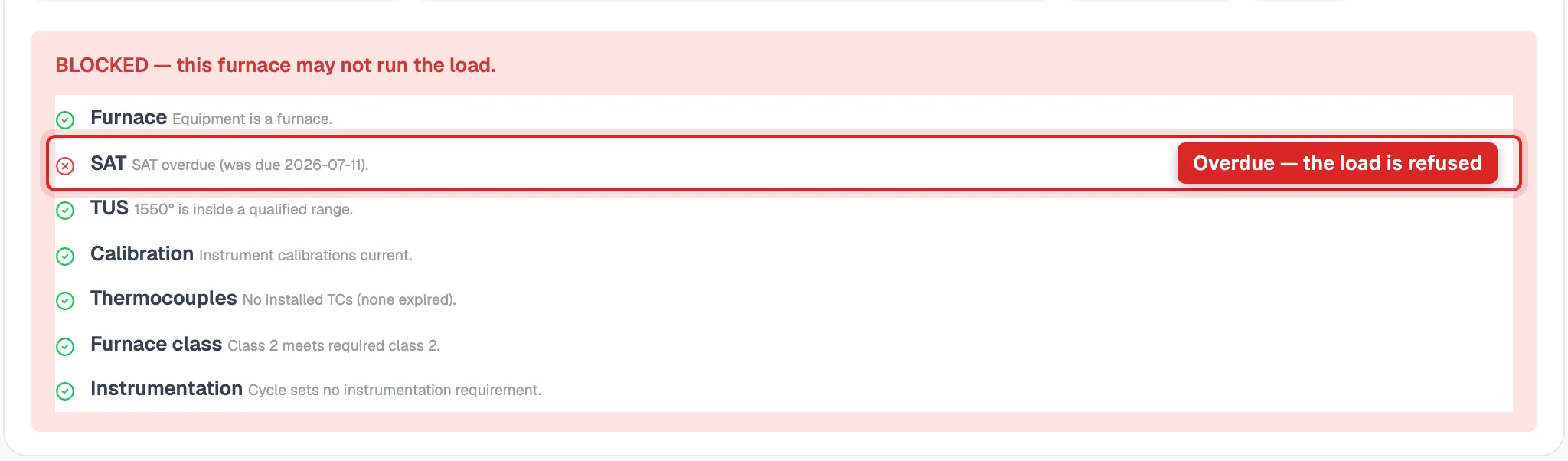
Out of compliance means the load does not run.
The four registers are useful separately and decisive together. Before a charge is built, all of them are asked at once, against this cycle at this temperature today: SAT current and passing, TUS current with the temperature inside the qualified range, calibrations current, thermocouples usable, furnace class and instrumentation type meeting what the recipe requires.
An out-of-compliance furnace is refused and the refusal names the reason. It is not a warning that can be clicked away on a night shift.
06 The audit pack
The records as they stood on the day
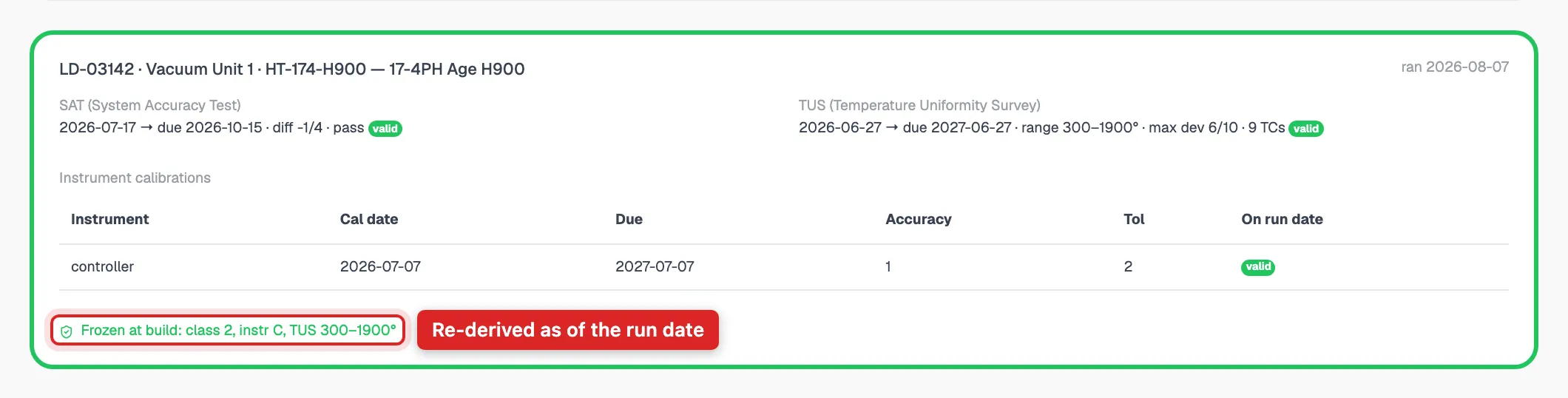
Not today's records — the ones in force when the load ran.
This is the question an audit actually asks, and the one a spreadsheet cannot answer. For any certificate, the pack reproduces the SAT, TUS and instrument calibrations that were in effect when each load ran, and re-derives whether they were valid on that date.
Gaps become findings. The pack is only complete when every record checks out, so "complete" is a claim the system is willing to stand behind rather than a label somebody applied.
Provenance
Written by someone who had to pass these audits
Every stage above exists because it was a problem first. HeatLock was built by someone working inside a commercial aerospace heat-treat shop, writing software to fix that shop's own processes — which is why the compliance model is the foundation here rather than a module bolted on afterwards.
Bring your own furnace list
The most useful demo is the one run against your equipment, your specifications and your intervals — including the furnace you already know is overdue.